Page 5 of 8
Schein’s theory of organizational culture and leadership
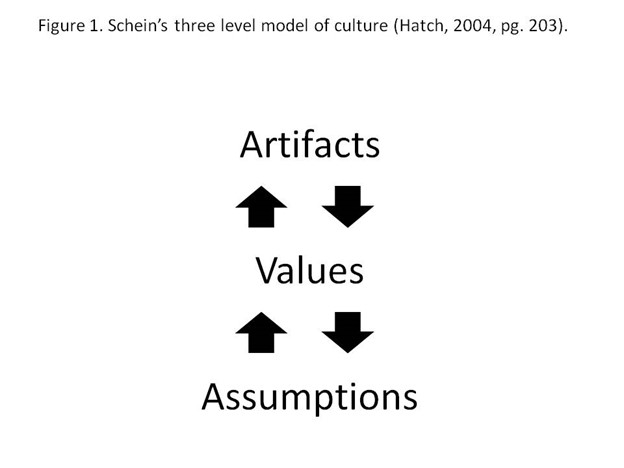
Shein (1985/1992 in Hatch, 2004) borrowed ideas directly from anthropology to propose organizational change and leadership theory that portrays culture on three levels: artifacts, values, and assumptions [Figure 1].
- Artifacts are the visible, tangible, and audible features on the surface of the culture, which are driven by the underlying values and assumptions.
- Values and assumptions lie beneath the surface of the culture. Values are the social principles shared by the culture.
- Assumptions are the deepest part of the culture because they draw from the subconscious mind conditioned by the former experiences and socialization of the members of the culture. In other words, the assumptions are the beliefs that the members take for granted. Understanding assumptions is the key to understanding and changing culture.
Schein’s model proves unworkable because it depends on making connections between assumptions, values, and artifacts while leaving critical gaps that dismiss an appreciation of culture as symbols and processes shared in organizational life.