Hatch’s dynamics of organizational culture
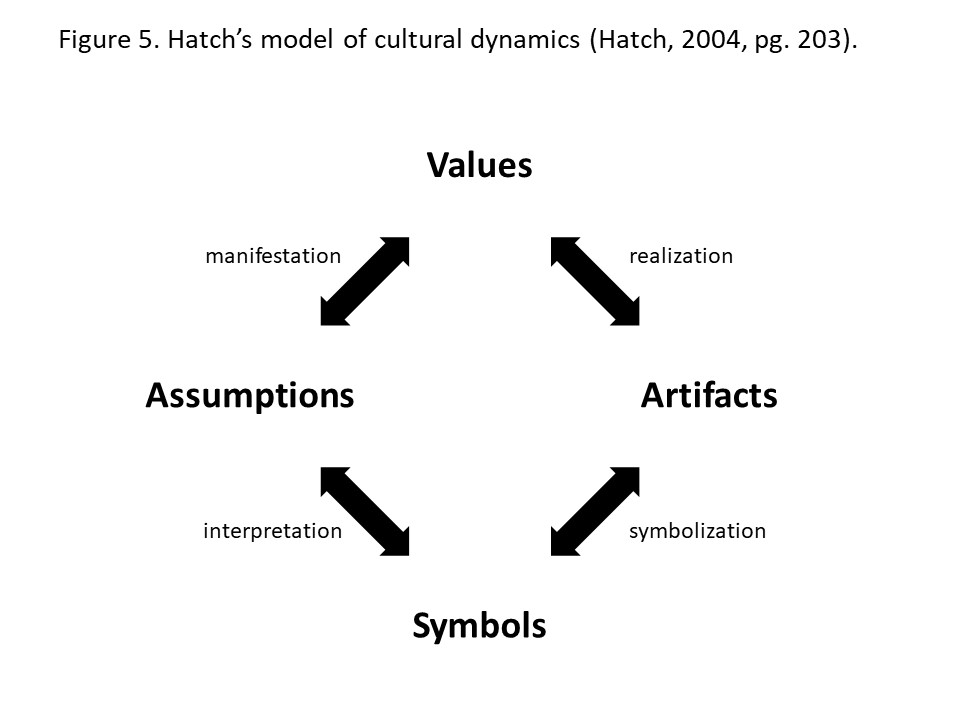
Hatch (2004) proposed a dynamic circular pattern in culture in which the individual and group mutually interact in existing cultural patterns while creating cultural patterns [See Figure 5]. Following Herskovits’s (1948, in Hatch 2004) circular notion about cultural processes supporting stability and change, Hatch reformulates Shein’s Assumptions > Values > Artifacts organizational culture framework by redrawing the model from a symbolic-interpretive perspective and introducing dynamism into organizational culture theory.
Considering the relationship among cultural elements, Hatch’s cultural dynamics model proposes that culture consists of four interrelated and dynamic processes: manifestation, realization, symbolization, and interpretation. The reformulated model places assumptions, values, artifacts, and symbols in a wheeled framework, showing the relationships between the elements and the processes, as follows:
Manifestation processes
Manifestation is how essence reveals itself, usually through the senses, cognition, or emotion. In the cultural dynamics model, assumptions appear in members’ perceptions, thoughts, and emotions.
Realization processes
Realization is the process by which something becomes real. In the cultural dynamics model realization processes are proactive and reactive.
Symbolizing processes
A symbol represents a conscious or unconscious association with a broader meaning. Logos, slogans, stories, actions, and metaphors serve as common symbols in an organization.
Interpretation processes
Interpretation is the process by which members apply meaning to an experience. The cultural dynamics framework puts symbolization experiences in context by giving members a reference for constructing meaning.
Integrative processes
Integrating the model with the cultural focus concept provides a better understanding of management’s role in cultural dynamics by helping managers intensify efforts on the areas of focus that are readily changeable. The processes in the cultural dynamics model are constant, so changes should begin at the stage that best represents the depth of change. Placing the manager within the organizational culture suggests that the power of leadership lies in their sensitivity to the symbolic meaning of being a leader. A leader’s ability to influence a culture depends on their “knowledge of and relationship with the culture” (207).
Regardless of what a leader does and how a leader intervenes, culture is a dynamic process in which stability and change are in constant motion. In addition, a dynamic model of cultural change suggests that stability and change cannot be predicted. They can only be interpreted and explained after the fact.